How AI Is Revolutionizing the Design and Building of Musical Equipment and Guitars
How AI Is Revolutionizing the Design and Building of Musical Equipment and Guitars
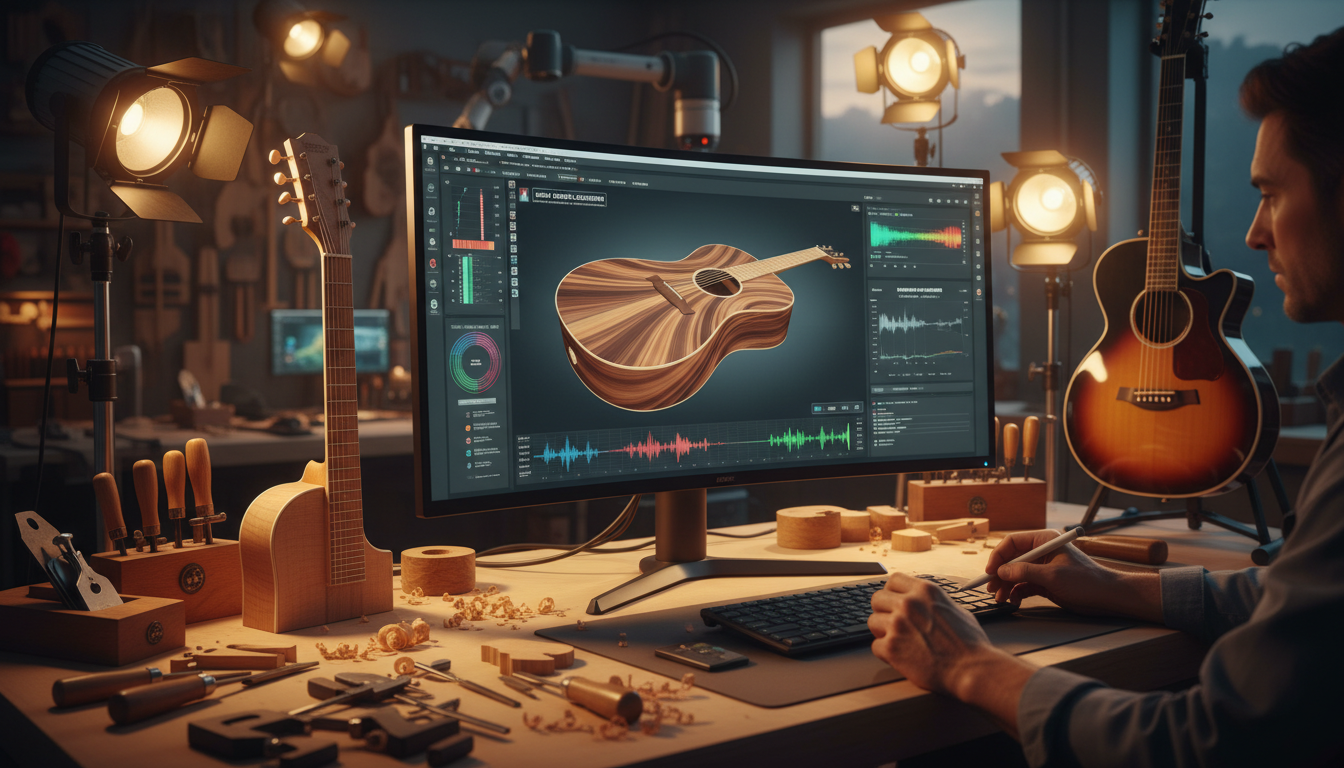
The world of musical instrument building has always been a blend of art and science. For centuries, master luthiers relied on intuition, experience, and hands-on experimentation to craft guitars and audio equipment that produced exceptional sound. Today, artificial intelligence is adding a powerful new dimension to this tradition—not replacing the craftsman's touch, but enhancing it in ways that were unimaginable just a decade ago.
AI-Powered Tonal Modeling and Sound Design
One of the most exciting applications of AI in guitar and equipment design is tonal modeling. Companies are now using machine learning algorithms to analyze thousands of recordings from legendary instruments—vintage guitars, classic amplifiers, and iconic effects pedals—to understand what makes them sound so special.
These AI systems can:
- Map tonal characteristics of wood species, body shapes, and construction methods to predict how a new instrument will sound before it's ever built
- Simulate pickup configurations and winding patterns to optimize electromagnetic response
- Model amplifier circuits to replicate the harmonic richness of tube amps in digital form with unprecedented accuracy
- Analyze frequency response patterns across thousands of speaker cabinets to design optimal enclosures
For example, neural network models can now predict the resonant frequency and sustain characteristics of a guitar body based on its wood density, grain pattern, and dimensions—allowing builders to select and pair tonewoods with scientific precision while preserving the artistry of traditional selection methods.
Machine Learning in CNC Manufacturing
Computer Numerical Control (CNC) machines have been used in guitar manufacturing for decades, but AI is taking their precision to an entirely new level. Modern AI-guided CNC systems can:
- Adapt cutting patterns in real time based on the specific density and grain direction of each piece of wood, reducing waste and improving consistency
- Learn from previous production runs to optimize tool paths, reducing manufacturing time while maintaining or improving quality
- Detect material defects before they become problems, using computer vision to identify grain irregularities, knots, or moisture inconsistencies that could affect tone or structural integrity
- Achieve tolerances measured in thousandths of an inch for neck pockets, bridge saddle slots, and fret placement
This doesn't mean handcrafted instruments are becoming obsolete. Rather, AI-assisted manufacturing is raising the floor for quality—even mid-range instruments now benefit from precision that was once reserved for custom shop builds.
Predictive Quality Control
Traditionally, quality control in instrument building relied heavily on the trained ears and eyes of experienced technicians. AI is now augmenting this process with predictive quality control systems that can:
- Analyze acoustic signatures during production to identify instruments that might develop issues over time
- Compare vibration patterns against databases of thousands of known-good instruments
- Flag potential structural weaknesses through thermal imaging and stress analysis
- Predict long-term stability of neck joints, bridge adhesion, and finish durability based on environmental data and material properties
At major manufacturers, AI-powered inspection systems can evaluate an instrument in seconds, checking everything from fret levelness to pickup output balance, ensuring that every guitar leaving the factory meets exacting standards.
AI in Amplifier and Effects Design
The impact of AI extends well beyond guitars into the broader world of professional audio equipment:
Amplifier Circuit Optimization
Machine learning algorithms can simulate millions of circuit variations to find optimal component values for desired tonal characteristics. This has led to a new generation of amplifiers that offer remarkable versatility without sacrificing the organic, responsive feel that musicians demand.
Digital Effects Processing
AI-driven modeling has transformed effects pedals and multi-effects processors. Companies like Neural DSP and Line 6 use deep learning to capture the nuanced behavior of analog circuits—including how components interact under different playing dynamics, temperature, and gain settings. The result is digital effects that respond and feel remarkably like their analog counterparts.
Speaker and Cabinet Design
AI helps engineers model the complex acoustic behavior of speaker cabinets, optimizing port dimensions, internal bracing, and baffle design for specific frequency ranges and applications. This is particularly valuable in professional audio where PA systems and studio monitors must deliver accurate, consistent sound across a wide range of environments.
Smart Instruments and Adaptive Technology
AI isn't just changing how instruments are built—it's becoming embedded in the instruments themselves:
- Self-tuning systems that use AI to learn a guitarist's preferred tunings and adjust automatically
- Adaptive EQ in acoustic guitars that analyzes room acoustics and compensates in real time
- Smart practice tools built into instruments that use AI to provide real-time feedback on technique, timing, and intonation
- Predictive maintenance alerts that notify players when strings are losing tonal quality or components need attention
The Impact on Repair and Maintenance
For repair professionals like us at Donald Lee Service, AI is becoming an increasingly valuable diagnostic tool:
- AI-assisted troubleshooting can help identify intermittent electronic faults by analyzing signal patterns over time
- Component matching algorithms ensure replacement parts are optimally paired with existing circuits
- Predictive diagnostics can flag potential failures before they happen, helping musicians avoid costly breakdowns during performances
- Documentation and knowledge bases powered by AI help technicians access repair procedures and schematics faster than ever
While AI provides powerful analytical capabilities, the hands-on expertise of a skilled technician remains irreplaceable. Understanding the nuances of how a musician uses their equipment, diagnosing intermittent issues that don't show up on test benches, and applying the human judgment needed for complex repairs—these are areas where experienced professionals continue to excel.
What This Means for Musicians
For working musicians and hobbyists alike, AI in instrument design and manufacturing translates to tangible benefits:
- Better instruments at every price point — AI-optimized manufacturing means even budget instruments play and sound better than ever
- More consistent quality — Predictive quality control reduces the chances of getting a "lemon"
- Personalized options — AI makes it feasible for manufacturers to offer more customization without astronomical price increases
- Longer instrument life — Better materials selection and construction lead to instruments that age gracefully
- Smarter maintenance — AI-powered diagnostics help keep instruments in peak condition
The Future: Where Tradition Meets Innovation
The most exciting aspect of AI in musical equipment isn't about replacing traditional craftsmanship—it's about enhancing it. Master builders now have access to data and analysis tools that help them understand why certain instruments sound magical, allowing them to replicate and build upon those qualities more consistently.
At Donald Lee Service, we stay current with these technological advances while maintaining our commitment to hands-on, expert repair work. Whether your equipment was built with AI-assisted precision or crafted entirely by hand, our Fender Gold and QSC Premier certified technicians have the skills and knowledge to keep it performing at its best.
Need your equipment serviced? Whether it's a vintage hand-built classic or a modern AI-designed instrument, Donald Lee Service provides expert repair and maintenance for all professional audio equipment. Contact us at (407) 978-6690 or email service@donaldleeservice.com to schedule your $50 Diagnostic/Estimate Fee appointment today.
Donald Lee Service — 1014 N. Hoagland Blvd., Kissimmee, FL 34741